

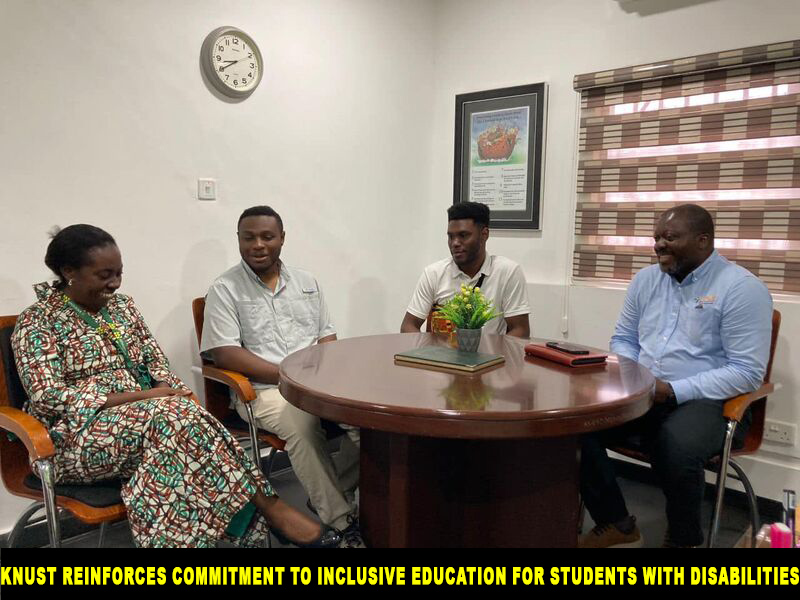
The question of whether a university environment is safe, accessible and supportive is one that weighs heavily on the minds of parents whose children live with disabilities. At KNUST, these concerns are not only acknowledged but actively transformed into assurance. The university has made inclusion a cornerstone of its mission, investing in structures, systems and policies that make the campus increasingly disability friendly. Within the first 100 words, it is clear that KNUST’s commitment to students with disabilities is deliberate, evolving and strongly supported by institutional leadership.
Building the Foundation: Accessible Infrastructure for All
KNUST believes that a world-class university must also be an accessible one. Over the years, significant investments have been made to reshape the physical environment to accommodate all students.
Key Accessibility Features on Campus
-
Ramped pathways and navigable walkways across newly built lecture halls and major facilities
-
Elevators in multilevel buildings
-
Accessible washrooms available in core areas
-
Reserved parking spaces, clearly marked for ease of mobility
-
Improved campus layout, allowing students with disabilities to move confidently and independently
These improvements show KNUST’s resolve to not only open its doors but to ensure every student can walk through them without barriers.
A Supportive Culture: Peer Assistance and Institutional Care
Beyond infrastructure, KNUST has cultivated a strong culture of solidarity—fostering spaces where students are supported, respected, and empowered.
Key Support Structures
-
Directorate of Student Affairs (DoSA) provides dedicated services for students with disabilities.
-
Disability Desk, operated by DoSA, handles all disability-related matters.
-
Association of Students with Disabilities, supported by the Disability Desk, advocates for student welfare.
-
Peer-support networks, run in partnership with the Mastercard Foundation Scholars Program, offer hands-on help with campus navigation, academic logistics, and day-to-day tasks.
-
Disability Advisory Committee, bringing together stakeholders to guide inclusive policies and ensure equitable participation.
These structures ensure that every student has easy access to emotional, academic and practical support.
A Catalyst for Change: The Gender Inclusion and Vulnerability Office (GIV Office)
To accelerate progress, the Vice-Chancellor established the Gender Inclusion and Vulnerability Office—a major engine of transformation for disability inclusion.
What the GIV Office Is Doing
-
Partnering with students with disabilities to identify challenges and co-create effective solutions
-
Strengthening and expanding peer-support networks, making them a formal, reliable part of campus life
-
Integrating inclusion into planning, ensuring accessibility becomes a core design principle for every new project
The GIV Office stands as a symbol of the university’s long-term commitment to inclusivity.
Step-by-Step Overview of KNUST’s Inclusion Strategy
-
Upgrade physical infrastructure to ensure accessibility across campus.
-
Strengthen support systems through DoSA, volunteers and student networks.
-
Collaborate with students to address needs and monitor progress.
-
Institutionalise peer-support structures for consistent, dependable assistance.
-
Embed inclusion into policy-making through the GIV Office and Disability Advisory Committee.
-
Promote a culture of dignity, independence and respect across the campus community.
Quotes and Key Institutional Messages
While the text does not include direct quotations, the following summarises the institutional tone:
KNUST affirms that inclusion is not an afterthought but a deliberate design principle guiding the university’s present and future.
The university acknowledges the concerns of parents and commits to creating an environment where every student with a disability can thrive.
Frequently Asked Questions (FAQs)
1. Is KNUST a disability-friendly university?
Yes. KNUST continues to invest in accessible facilities, policies and support systems to ensure full participation for students with disabilities.
2. Does the university provide academic support for students with disabilities?
Yes. Peer networks, volunteers and DoSA offer academic logistics assistance, including guidance across campus and support with learning activities.
3. Are there dedicated offices for disability-related issues?
Yes. The Disability Desk and the GIV Office handle disability matters, policy coordination and student support.
4. Can parents engage with the university regarding disability support?
Absolutely. Parents are encouraged to contact the relevant offices for guidance, updates and to understand support options available to their children.
5. Does KNUST collaborate with external organisations?
Yes. The Mastercard Foundation Scholars Program is a key partner supporting peer networks and inclusive initiatives.


