

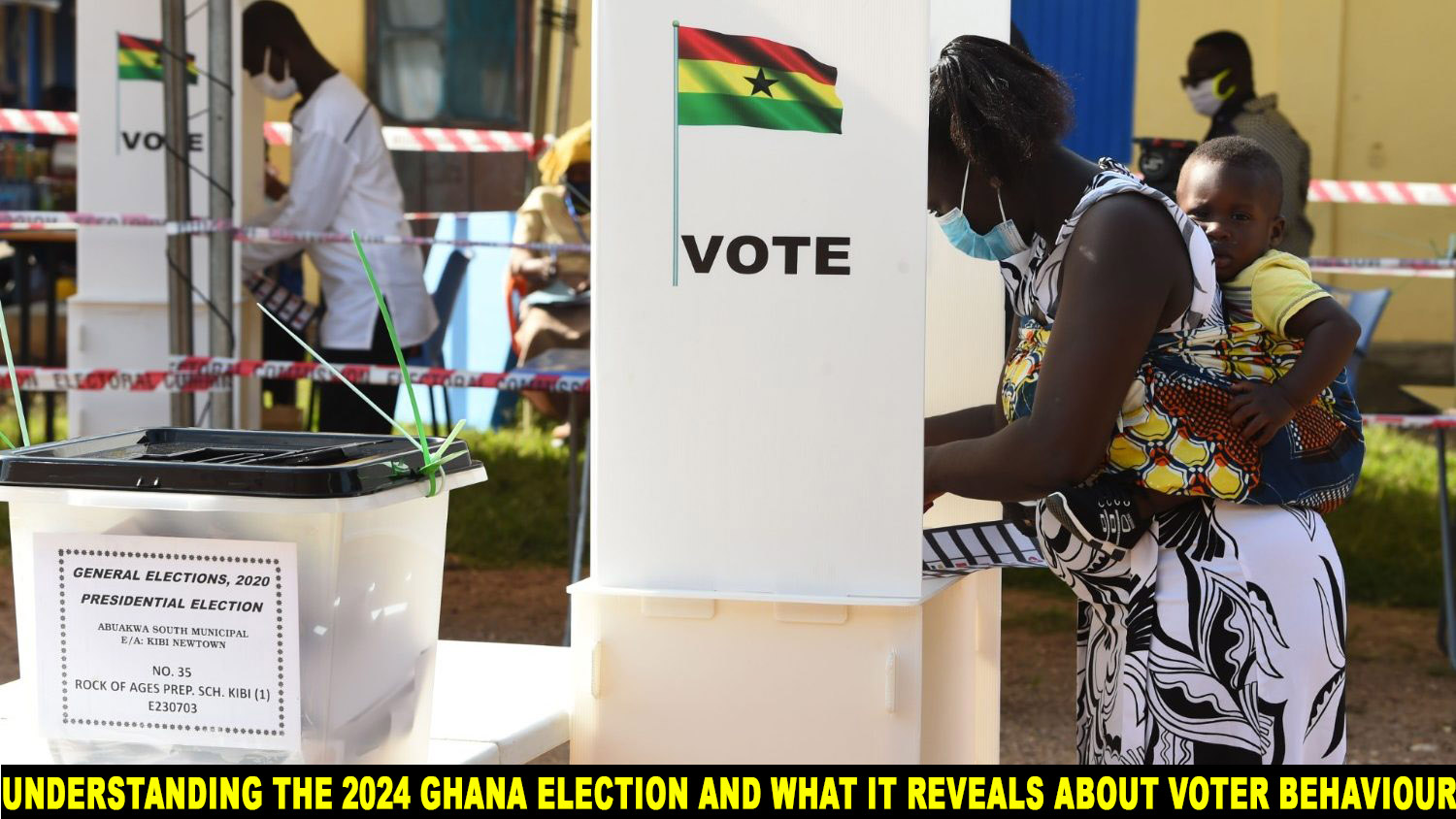
The 2024 Ghana election offered significant insights into the political mood of the nation. Exactly one year after Ghanaians went to the polls on December 7, the outcomes have become a major reference point for analysing voter behaviour, governance standards, accountability, and the future of political leadership. This article explores the critical lessons from the 2024 Ghana election, highlighting why voters made the decisions they did and what incumbent governments must learn.
1. The Ballot Box Remains Ghana’s Strongest Accountability Tool
Despite low civic engagement in non-election periods, the Ghanaian voter reliably uses elections to demand accountability. This was evident in:
-
The decisive mandate handed to the NDC in the presidential race
-
The shift in parliamentary seats
-
A clear withdrawal of confidence in the governing NPP
As seen in 2016 and even more strongly in 2024, public officials may evade accountability between elections, but the ballot box remains their ultimate reckoning.
2. Economic Conditions Strongly Influence Electoral Outcomes
Economic hardship played a central role in the 2024 election. Former President Kufuor’s message in 2000—“vote based on your living conditions”—resurfaced with renewed relevance.
Ghanaians faced:
-
Inflationary pressures
-
High cost of living
-
Widespread economic dissatisfaction
In 2024, many voters embraced the message of economic change, leading to a rejection of the governing party and a belief that new leadership could provide better economic management.
3. Perceptions of Corruption Significantly Affected Voter Decisions
Data from Afrobarometer showed a sharp rise in negative perceptions:
-
Ghanaians who believed corruption had “increased a lot” grew from 38% (2019) to 63% (2024)
-
Approval of the government’s fight against corruption fell from 39% to 15%
The government’s strict “due process only” approach was widely seen as insufficient. Many voters perceived it as a lack of willingness to genuinely fight corruption.
4. Governance Quality Has Electoral Consequences
Poor governance carries political costs. As the writer’s mother emphasised in 2016:
“Poor governance outcomes must not be rewarded with electoral victory.”
In 2024, many voters applied this standard:
-
Failures in economic management
-
Public dissatisfaction
-
Unmet expectations
The result made it clear that governance performance directly impacts electoral prospects.
5. Electoral Commission Chairs Do Not Decide Elections
Both in 2016 and 2024, political parties questioned the neutrality of EC chairs.
However, the elections demonstrated that:
-
No EC chair can overrule the will of determined Ghanaian voters
-
Party vigilance alone does not determine electoral outcomes
-
Ghanaian voters remain the most powerful force in elections
Regardless of suspicions or allegations, the electorate ultimately shapes political outcomes.
6. Good Policies Alone Cannot Save a Government
Despite widespread dissatisfaction, many flagship NPP policies remained highly popular:
-
Free SHS: 86% support
-
One District One Factory: 76%
-
Planting for Food and Jobs: 81%
-
One Village One Dam: 63%
The lesson is clear:
Strong policies matter, but economic performance, governance credibility, and public trust matter more.
Lessons for Incumbent Governments
The 2024 election provides a strong warning to all political parties in power:
-
Ghanaian voters may operate within an eight-year political cycle,
-
But they will not hesitate to remove an incumbent when conditions become unfavourable.
The 2008 election showed this in a close contest.
The 2016 and 2024 elections demonstrated it even more forcefully.
The biggest lesson:
Dissatisfied voters will send any government home—no matter its policies, messaging, or incumbency advantage.
FAQs
1. Why did the NPP lose the 2024 election?
Because economic hardship, corruption perceptions, and governance concerns shaped voter behaviour more strongly than policy achievements.
2. Did the Electoral Commission influence the results?
No. Historical patterns show that EC chairs do not determine electoral outcomes; the voter does.
3. Were NPP policies unpopular?
No. Many policies enjoyed strong public support, but overall governance performance overshadowed them.
4. What does this election mean for future incumbents?
Governance quality, economic stability, and transparency must improve if an incumbent hopes to be retained.


