

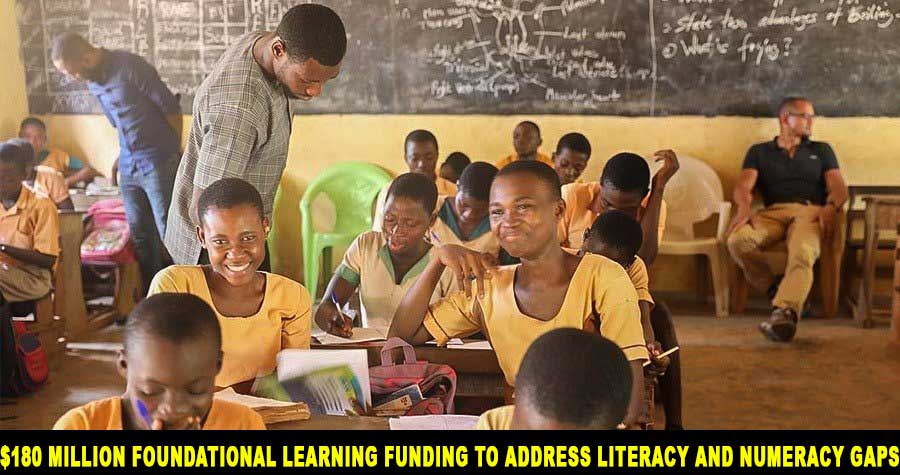
The Ministry of Education has secured $180 million in funding to strengthen foundational learning in basic schools across Ghana, as part of efforts to address persistent literacy and numeracy gaps at the early stages of education. The funding, sourced through the Jacobs Foundation in collaboration with the World Bank, will be implemented through key national programmes to improve learning outcomes and promote inclusive education.
Why Foundational Learning Is Critical for Ghana’s Education System
According to the Minister of Education, Haruna Iddrisu, foundational learning forms the backbone of long-term educational and social success.
Key reasons include:
-
Strong literacy and numeracy skills improve secondary and tertiary education outcomes
-
Early learning predicts future productivity and citizenship
-
Addressing gaps early reduces long-term educational inequality
“Foundational learning is the key to the success of secondary and tertiary education,” the Minister emphasised.
Step-by-Step: How the $180 Million Funding Will Be Used
The funding will be deployed strategically through established national frameworks and stakeholder partnerships:
-
Implementation Through National Programmes
Funds will be channelled via the Ghana Accountability for Learning Outcomes Programme (GALOP) and the Ghana Education Outcomes Project. -
Civil Society Engagement
Civil society organisations will support implementation, monitoring and accountability. -
Curriculum Reforms
Ongoing reforms will strengthen learning at kindergarten and primary levels. -
Digital Skills at Early Stages
Digital education and foundational digital skills will be introduced early. -
Inclusive Language Policy
Instruction will be delivered using 13 Ghanaian languages, including sign language.
Stakeholder Engagement and Social Inclusion
Mr Iddrisu disclosed the funding at a national stakeholders’ forum on Social Inclusion in Basic Education held in Tamale. The forum was organised in partnership with the Ghana Developing Communities Association (GDCA) and YEFL-Ghana under the Citizen-Led Actions for Education Accountability and Responsiveness (CLEAR) project.
The project is being implemented in six districts across:
-
Northern Region
-
Savannah Region
-
Upper West Region
-
Upper East Region
-
North East Region
Its focus is to build advocacy around quality and equity in basic education through citizen and stakeholder collaboration.
Official Remarks
Speaking at the forum, Haruna Iddrisu stated:
“Foundational learning is the key to the success of secondary and tertiary education. If a child gets it right early, you can predict a productive and successful life.”
He added:
“We want children to grow up as responsible citizens who will not plunder the resources of the state for personal gain, but work for the good of the public.”
Concerns Over Foundational Weaknesses
The Director of School for Life, Wedad Sayibu, warned that persistent foundational weaknesses threaten sustainable progress in Ghana’s education sector.
She cited challenges including:
-
Chronic underinvestment in early childhood education
-
Dilapidated school infrastructure
-
Multi-grade teaching due to teacher shortages in deprived areas
Ms Sayibu revealed that over 456,500 children have benefited from the Complementary Basic Education (CBE) programme, with some advancing to higher levels of education.
“Our work has transformed lives and contributed to national policy reforms,” she noted.
Urban–Rural Education Disparities
Development Consultant Baviina Safia Musah also highlighted ongoing disparities between urban and rural education outcomes, calling for targeted interventions to bridge the gap.
FAQs
What is the purpose of the $180 million funding?
To improve foundational literacy, numeracy and early learning outcomes in basic schools.
Which organisations are supporting the funding?
The Jacobs Foundation and the World Bank, working with the Ministry of Education.
Which programmes will implement the funds?
GALOP and the Ghana Education Outcomes Project.
How does this support inclusive education?
Through language inclusion, digital learning and support for deprived districts.


