

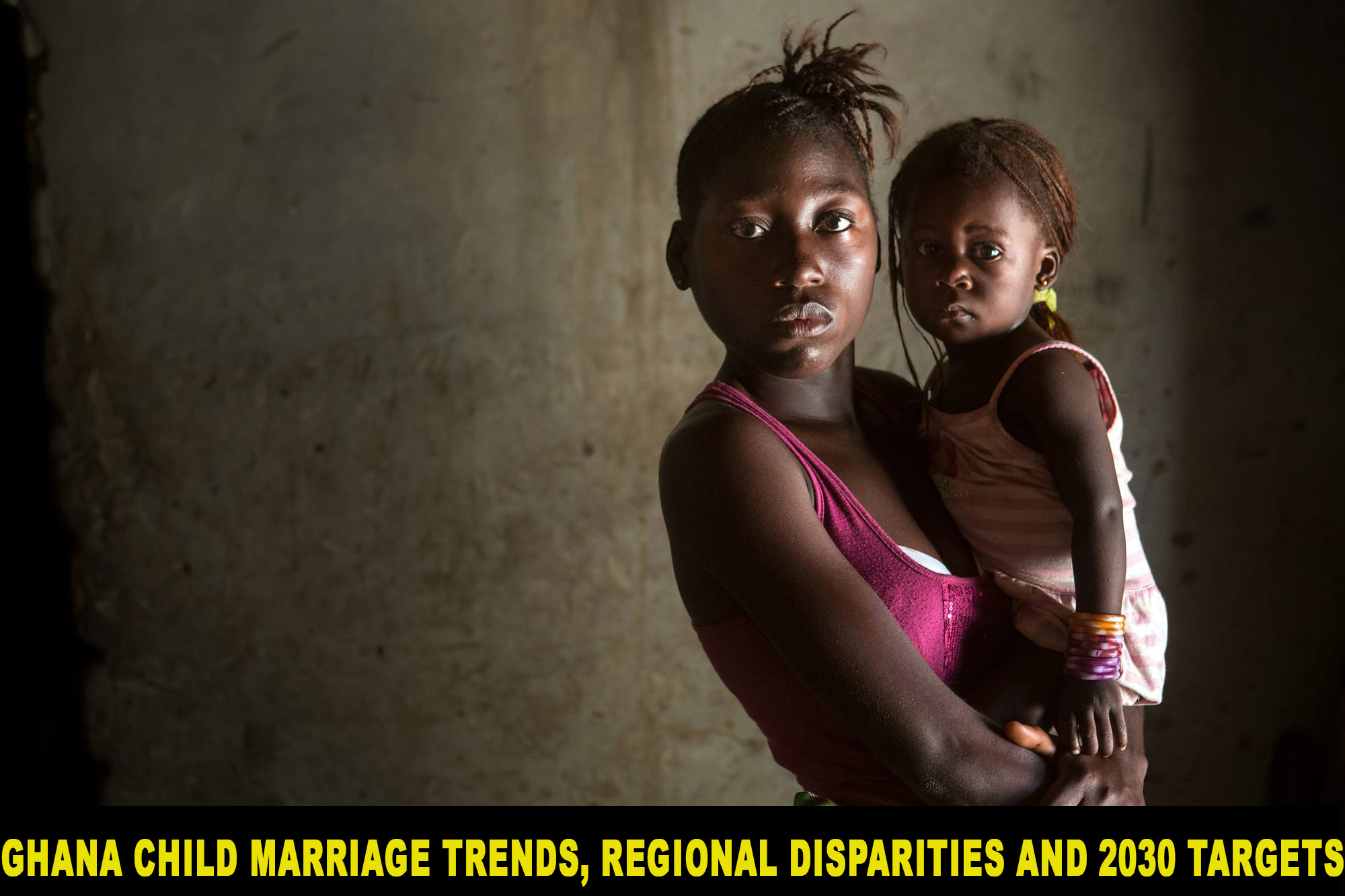
The child marriage rate in Ghana has recorded a significant decline over the past three decades, falling from 39 per cent in 1993 to 19 per cent currently, according to the Upper West Regional Gender Officer, Charity Baature. While this progress reflects sustained national and stakeholder efforts, authorities say the figure remains unacceptable, as child marriage continues to threaten the health, education and dignity of young girls across the country.
Progress Made in Reducing Child Marriage in Ghana
Speaking at a stakeholder engagement in Kumasi, Ms Baature noted that although Ghana has made measurable gains, the goal remains total eradication of child marriage.
She stressed that the current rate still leaves nearly one in five girls under 18 affected, underscoring the need for intensified interventions, especially at the community level.
Step-by-Step: Ghana’s Strategy to Reduce Child Marriage
-
Community Engagement and Education
Government agencies are engaging faith-based organisations (FBOs) to challenge harmful social norms and practices. -
Addressing Poverty as a Root Cause
Poverty remains a key driver, often pushing girls into early sexual activity and teenage pregnancy. -
Promoting the Re-entry Policy for Pregnant Girls
Authorities are intensifying education on Ghana’s re-entry policy to allow young mothers to return to school after childbirth. -
Faith-Based Leadership Involvement
Religious leaders are being empowered to lead advocacy efforts due to their influence within communities. -
Long-Term National Targets
Ghana aims to reduce child marriage from 19 per cent to 12 per cent by 2030, and further to 5 per cent by 2050.
Quotes and Official Remarks
“Our ambition is to eradicate it completely to safeguard the lives and dignity of Ghanaian young girls,”
— Charity Baature, Upper West Regional Gender Officer, MoGCSP.
“Faith leaders play a central role in shaping beliefs, influencing behaviour and guiding the moral direction of our society,”
— Micheal Owusu Amoako, Chief Director, Ashanti Regional Coordinating Council.
“With the support of religious leaders, we can build a Ghana where no child is forced into marriage,”
— Richard Obeng Boafo, Ministry of Local Government, Chieftaincy and Religious Affairs.
Regional Disparities Remain a Major Concern
Despite the national decline, significant regional and district-level disparities persist, with some areas recording distressingly high prevalence rates. These inequalities continue to deprive young girls of education, health and future economic opportunities.
Role of Traditional and Religious Leaders
The Paramount Chief of the Kuntanase Traditional Area, Barima Ogyeabour Amankwaah Adunan II, described child marriage and gender-based violence as widespread but often silent, persisting due to ignorance or deliberate harm by perpetrators.
FAQs
What is the current child marriage rate in Ghana?
The current rate stands at 19 per cent, down from 39 per cent in 1993.
What is Ghana’s target for reducing child marriage?
Ghana aims to reduce the rate to 12 per cent by 2030 and 5 per cent by 2050.
What are the main causes of child marriage in Ghana?
Key drivers include poverty, harmful social norms, teenage pregnancy and limited access to education.
Why are faith-based organisations important in addressing child marriage?
Religious leaders have strong community influence and can help change attitudes and behaviours.


