

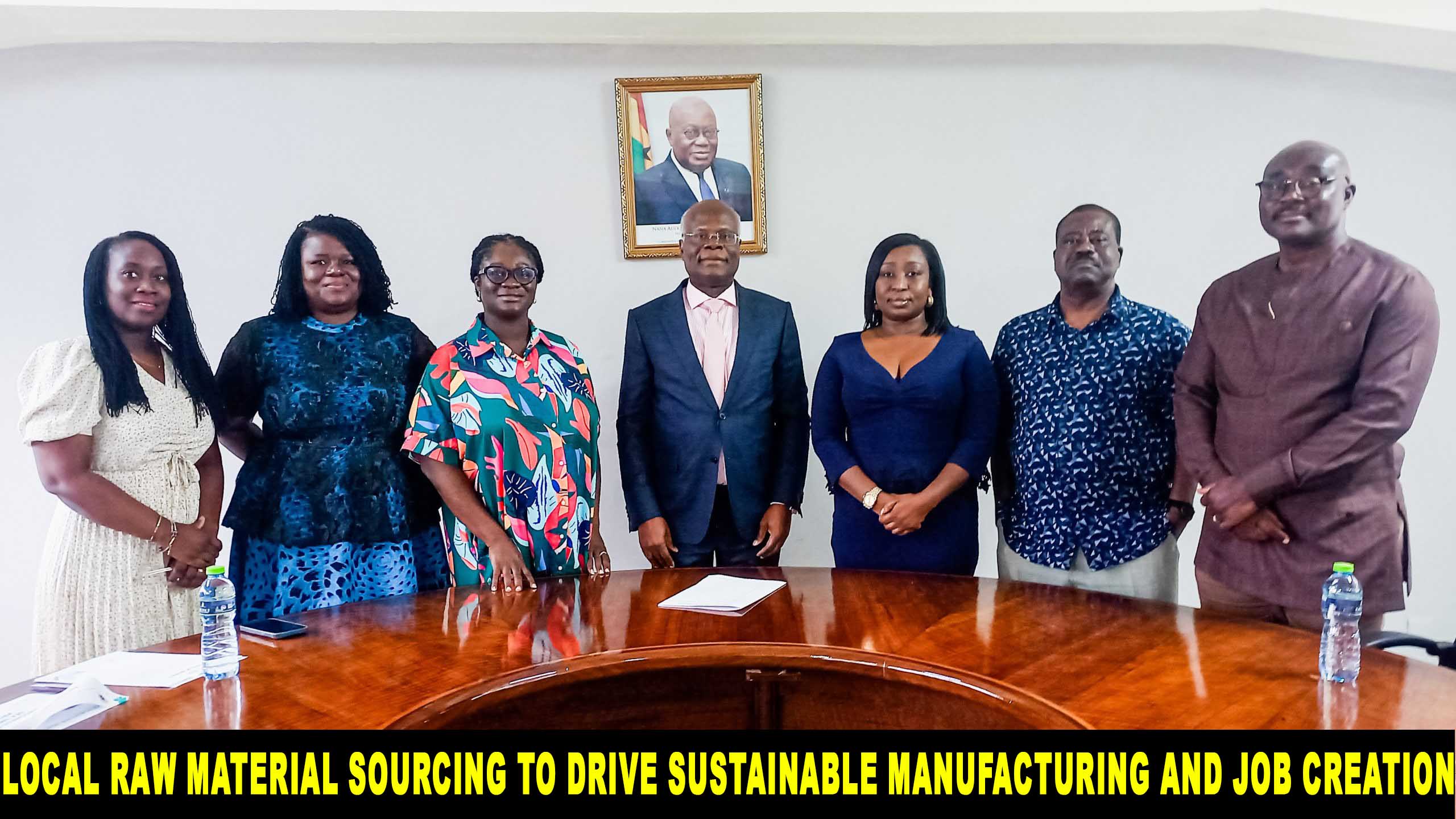
The Minister of Trade, Agribusiness and Industry, Mrs Elizabeth Ofosu-Adjare, has urged manufacturing companies in Ghana to prioritise local raw material sourcing as a strategic tool for job creation and sustainable industrialisation. Speaking during a working visit to GB Foods, the Minister emphasised that sourcing inputs locally strengthens value chains, supports farmers and positions Ghana as a competitive manufacturing and export hub under the African Continental Free Trade Area (AfCFTA).
Why Local Sourcing Is Critical for Ghana’s Industrial Growth
Local sourcing of raw materials plays a vital role in building a resilient industrial economy. According to the Minister, manufacturing cannot be truly sustainable without strong linkages to local agriculture and input suppliers.
Key benefits include:
-
Job creation across the entire value chain
-
Reduced reliance on imported raw materials
-
Improved foreign exchange earnings
-
Stronger industrial self-sufficiency
“When raw materials are sourced locally, we can confidently say we are industrialising,” Mrs Ofosu-Adjare stated.
Step-by-Step: How Manufacturers Can Support Local Industrialisation
Manufacturers operating in Ghana can contribute to national development by adopting the following approaches:
-
Invest in Commercial Farming
Establish company-owned farms to secure consistent local raw material supply. -
Adopt Backward Integration Models
Partner with smallholder farmers and outgrower schemes to strengthen local production. -
Maintain High Quality Standards
Implement strict laboratory testing and processing systems to ensure product safety. -
Expand Export-Oriented Production
Leverage AfCFTA opportunities to access West African and continental markets. -
Collaborate with Government
Engage authorities to address infrastructure, water and utility challenges.
GB Foods Sets the Pace for Local Sourcing
Mrs Ofosu-Adjare commended GB Foods for its high operational standards and plans to venture fully into commercial farming next year. She noted that by next year, 90 to 100 per cent of the company’s raw materials could be sourced locally.
The Minister also praised:
-
The company’s quality control laboratories
-
Strong processing and safety standards
-
Growing exports to markets such as Burkina Faso
Official Remarks
Highlighting the value of domestic supply chains, the Minister said:
“If we enjoy the entire value chain, that is where the real value lies. Local sourcing means jobs for farmers, transporters and everyone along the value chain.”
On exports and AfCFTA, she added:
“Manufacturing in Ghana and exporting to West Africa and beyond is the future. With the African Continental Free Trade Area headquartered here, Ghana is the right place to invest and export.”
Government Support for Garments and Textiles
During a visit to Precious Textiles Company Limited in Tema, Mrs Ofosu-Adjare revealed that government has developed a draft garments and textiles policy and plans to establish three new garment plants nationwide.
To support local factories, government will:
-
Prioritise local manufacturers for security agency uniforms
-
Set up a committee to ensure factories benefit from public contracts
“The days of sewing uniforms outside Ghana while our factories struggle are over,” she declared.
Industry Challenges and Expansion Plans
Dr J. Teddy Ngu, Director for Institutional Affairs and Agribusiness Africa at GB Foods, highlighted challenges including unreliable water supply, which costs the company about €700,000 annually.
He disclosed that GB Foods has:
-
Secured 6,000 hectares of land in the Afram Plains
-
Plans to operate a 2,000-metric-tonne-per-day factory by next year
-
Introduced outgrower schemes for tomatoes, onions, ginger, garlic and turmeric
“These initiatives will create jobs, stabilise raw material supply and expand exports across Africa,” Dr Ngu said.
FAQs
Why is local raw material sourcing important?
It creates jobs, reduces imports and strengthens Ghana’s industrial value chain.
How does AfCFTA benefit Ghanaian manufacturers?
It provides access to wider African markets, making Ghana a strategic export base.
What support is government offering manufacturers?
Policy reforms, local procurement initiatives and commitments to resolve sector bottlenecks.


